



Service scheduling software is designed to help service-based businesses plan, assign, and manage jobs without chaos. Instead of juggling spreadsheets, calls, and last-minute changes, everything runs from one system.
If your business depends on appointments, field staff, or time-based services, this software is no longer optional—it’s operational infrastructure.
Table of Contents
What Is Service Scheduling Software?
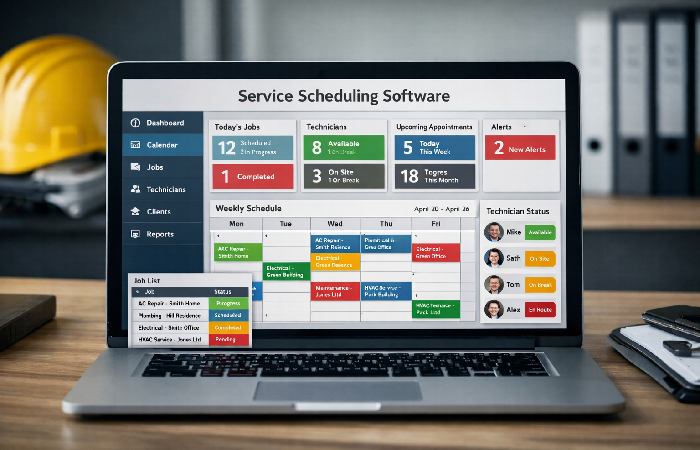
Service scheduling software is a digital system that helps businesses schedule service appointments, assign work to staff, track job status, and manage time in real time.
In simple terms, it answers four critical questions:
- Who is doing the job?
- When is it happening?
- Where is it happening?
- What needs to be done?
Modern tools often combine scheduling with calendars, customer records, notifications, and reporting.
Why People Search for Service Scheduling Software
Most users aren’t just “curious.” They’re dealing with real pain:
- Missed or double-booked appointments
- Technicians arriving late or unprepared
- Too much manual coordination
- Poor visibility into daily operations
The deeper motivation is control. Businesses want smoother operations, fewer mistakes, and happier customers—without hiring more admin staff.
The dominant search intent is informational + commercial. Users want to understand the software and evaluate whether it’s right for them before choosing a tool.
Who Service Scheduling Software Is For
This software is best suited for:
Small and Mid-Sized Service Businesses
-
Home services (cleaning, plumbing, HVAC, pest control)
-
Repair and maintenance companies
-
IT support and on-site technicians
Appointment-Based Service Providers
-
Salons and wellness services
-
Medical and therapy clinics (non-clinical scheduling)
-
Professional services offering time-based sessions
Operations and Service Managers
-
Coordinating multiple teams or locations
-
Managing shift-based or mobile staff
-
Tracking workload and availability
If scheduling errors directly affect revenue or customer trust, this software is for you.
Who Should Be Cautious or Avoid It
Service scheduling software may not be ideal if:
-
You operate solo with very low appointment volume
-
Your work is project-based with no fixed schedules
-
You lack basic digital readiness (devices, internet, staff training)
In these cases, simpler tools or manual systems may be enough—for now.
Core Benefits of Service Scheduling Software
1. Fewer Scheduling Mistakes
Automated calendars prevent double bookings and missed jobs.
2. Better Use of Staff Time
Workloads are balanced based on availability, skills, or location.
3. Improved Customer Experience
Automated reminders and accurate arrival times reduce frustration.
4. Real-Time Visibility
Managers can see job status, delays, and availability instantly.
5. Lower Administrative Costs
Less manual coordination means fewer hours spent on scheduling tasks.
Common Drawbacks to Be Aware Of
-
Setup time: Initial configuration can take days or weeks
-
Learning curve: Staff may need training
-
Overpaying for features: Many businesses buy more than they need
The key is choosing software that matches your actual workflow—not a bloated system.
How Service Scheduling Software Works (Step by Step)
Step 1: Job or Appointment Creation
A service request is created manually, online, or via phone.
Step 2: Automatic or Manual Assignment
The system assigns the job based on rules like availability, location, or skills.
Step 3: Calendar & Team Sync
Jobs appear on shared calendars and staff mobile apps in real time.
Step 4: Notifications & Reminders
Customers and staff receive confirmations, updates, or delays automatically.
Step 5: Job Completion & Reporting
Completed jobs feed into reports for performance and planning.
Key Features to Look For
| Feature | Why It Matters |
|---|---|
| Real-time scheduling | Prevents conflicts and last-minute chaos |
| Mobile access | Essential for field teams |
| Customer notifications | Reduces no-shows |
| Staff availability tracking | Improves workload balance |
| Integrations | Connects with CRM, billing, or tools like calendars |
| Reporting | Helps identify inefficiencies |
Avoid choosing based on feature count alone. Focus on relevance.
Common Mistakes Businesses Make
Choosing Software Too Complex
Advanced tools can slow teams down if they don’t match daily operations.
Ignoring Mobile Experience
If technicians can’t easily use it on-site, adoption fails.
Skipping Workflow Mapping
Without understanding current processes, implementation suffers.
Not Training Staff Properly
Even good software fails with poor onboarding.
Myths vs Facts
1: Service scheduling software is only for large companies
Fact: Many tools are built specifically for small teams.
2: It replaces human decision-making
Fact: It supports decisions; humans stay in control.
3: Setup is instant
Fact: Good setup takes time—but pays off long-term.
Real-World Scenarios Where It Makes a Difference
- A cleaning company reduces missed appointments by using automated reminders.
- A repair business assigns jobs based on technician proximity, cutting travel time.
- A service manager spots recurring delays through scheduling reports and adjusts staffing.
These outcomes don’t require enterprise systems—just well-fitted software.
Data & Industry Trends (2023–2026)
- Businesses using automated scheduling report 20–30% reduction in missed appointments (industry benchmarks across service SaaS platforms).
- Mobile-first scheduling tools show higher staff adoption rates than desktop-only systems.
- Integration with billing and CRM tools is now a baseline expectation, not a premium feature.
Where data varies by industry, results depend heavily on implementation quality.
How to Choose the Right Service Scheduling Software
Ask yourself:
- How many appointments do we manage weekly?
- Do we need field or mobile support?
- What tools must it integrate with?
- Who will actually use it daily?
Shortlist tools that solve today’s problems first—then scale.
Conclusion
Service scheduling software is no longer just a convenience—it’s a core operational tool for modern service businesses. When appointments, staff availability, and customer expectations are managed manually, small errors quickly turn into lost revenue and damaged trust. The right software brings structure, visibility, and reliability to daily operations without adding unnecessary complexity.
For businesses handling recurring services, field teams, or time-sensitive appointments, service scheduling software helps reduce missed bookings, optimize staff workloads, and deliver a more consistent customer experience. The smartest next step is to evaluate your current scheduling challenges, identify the features that truly matter to your workflow, and adopt a solution that supports how your business actually operates today—while remaining flexible enough to grow with you.
FAQs
What is service scheduling software used for?
It’s used to plan appointments, assign staff, and manage service jobs efficiently.
Is service scheduling software suitable for small businesses?
Yes. Many tools are designed specifically for small and mid-sized teams.
Does service scheduling software work for field services?
Most modern platforms support mobile access and real-time updates for field teams.
How long does implementation usually take?
Anywhere from a few days to a few weeks, depending on complexity and training.