



Georgia Tech Volleyball is best understood not by isolated seasons, but by how it competes inside the ACC ecosystem—balancing recruiting, facilities, and long-term development.
For many people searching “Georgia Tech Volleyball,” the problem is simple: it’s hard to tell whether the program is rising, stagnating, or quietly improving. Season records alone don’t give the full picture. That confusion grows when you compare Georgia Tech to powerhouse volleyball schools and wonder why results look different.
The solution is context. Once you understand the conference, recruiting realities, and development model, Georgia Tech Volleyball makes much more sense—and becomes easier to evaluate fairly.
Table of Contents
Key Takeaways
-
Georgia Tech plays in a demanding ACC volleyball environment.
-
Success is incremental and development-driven.
-
Recruiting pipelines shape outcomes more than single seasons.
-
Facilities and support impact long-term competitiveness.
-
Progress shows up first in match quality, not standings.
Understanding Georgia Tech Volleyball Today
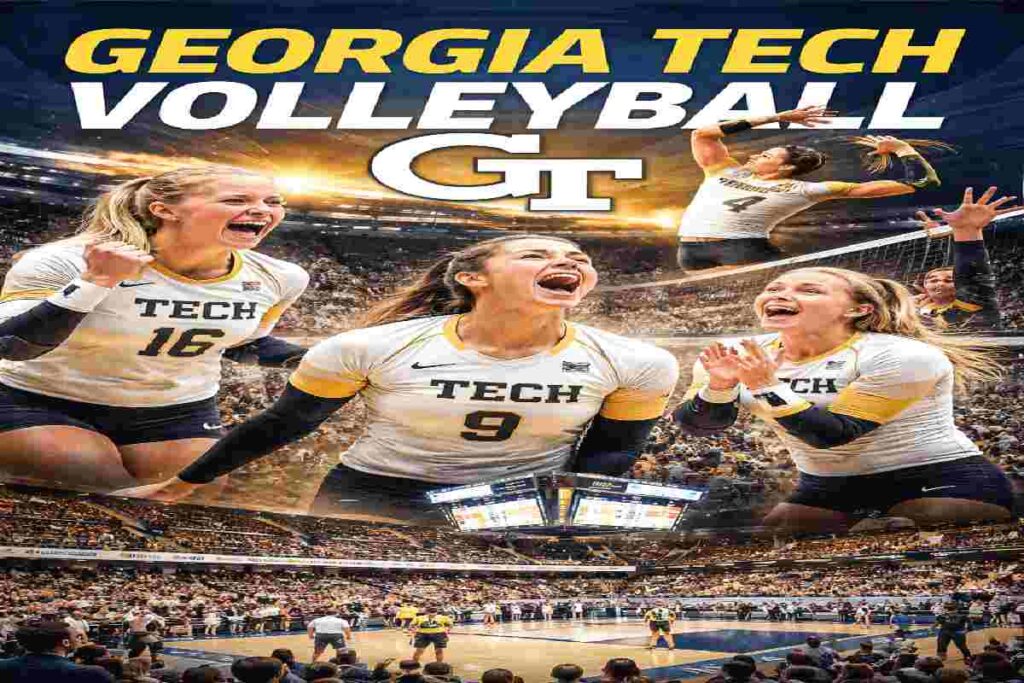
Georgia Tech Yellow Jackets volleyball represents a high-academic, Division I program balancing elite education with top-tier athletic competition. Unlike volleyball-first schools where the sport dominates campus culture, Georgia Tech Volleyball operates within a broader athletic ecosystem.
That means expectations must be calibrated differently. The program often prioritizes long-term athlete development, academic fit, and system cohesion over quick fixes.
Conference Reality – Playing in the ACC
The Atlantic Coast Conference is not forgiving. Programs like Louisville and Pittsburgh consistently attract top national recruits and transfer talent. For Georgia Tech, every conference match is a high-level test.
Why this matters:
-
Fewer “easy wins” compared to mid-major conferences
-
Narrow margins between competitive losses and wins
-
Young rosters are exposed early, accelerating development but hurting short-term records
A .500 season in the ACC can represent real progress even if it doesn’t look impressive on paper.
Recruiting & Player Development Model
Georgia Tech Volleyball typically recruits from:
-
The Southeast (strong but crowded talent pool)
-
Select national prospects who value academics
-
Development-oriented athletes over early peak stars
Development reality:
Freshmen rarely dominate immediately. Most impact players emerge in their sophomore or junior seasons after adjusting to ACC speed and physicality.
This creates a lag effect: recruiting classes show results 2–3 years later, not instantly.
Facilities, Support, and Home Advantage
Facilities don’t just affect training—they influence perception.
Strong programs use facilities to:
-
Signal seriousness to recruits
-
Support recovery and analytics
-
Create intimidating home environments
Georgia Tech’s home matches can be deceptively tough for visitors. Crowd energy and familiarity often keep matches closer than rankings predict.
How Georgia Tech Compares to Peer Programs
Qualitative Comparison Table (ACC-Adjacent Programs)
| Program Type | Recruiting Reach | Facilities | Typical Ceiling |
|---|---|---|---|
| Elite ACC (Top Tier) | National / International | Top-tier | Final Four contention |
| Strong ACC | National | Very strong | Top-25 finishes |
| Georgia Tech | Regional + selective national | Competitive | NCAA bubble / Upsets |
| Mid-ACC | Regional | Solid | Conference middle |
| Rebuilding ACC | Local | Limited | Development phase |
Georgia Tech sits in the dangerous middle: good enough to upset top teams, inconsistent enough to frustrate casual fans.
What Fans, Recruits, and Analysts Should Watch
Instead of focusing only on standings, watch for:
-
Sets won against ranked opponents
-
Fewer blowout losses
-
Upperclassmen leadership impact
-
Recruiting class continuity (low transfer churn)
These indicators usually precede visible jumps in results.
Georgia Tech Volleyball: Tickets, Roster, Rankings, and More
Georgia Tech Volleyball Tickets
Interest in Georgia Tech Volleyball tickets usually comes from students, alumni, and local fans who want to experience matches live. Home games are known for being competitive and energetic, especially against ranked ACC opponents. Ticket demand often increases during conference play and rivalry matchups, making early planning important. Attending matches in person also gives fans a better sense of the team’s pace, physicality, and development than box scores alone.
Georgia Tech Volleyball Roster
The Georgia Tech Volleyball roster reflects a balance between athletic ability and academic fit. Rosters typically include a mix of underclassmen gaining experience and upperclassmen providing leadership. For recruits and analysts, position depth and class distribution matter more than star power alone. A well-balanced roster often signals program stability and a clear development pipeline rather than short-term experimentation.
Georgia Tech Volleyball Roster 2025
Interest in the Georgia Tech Volleyball roster 2025 highlights long-term curiosity from recruits, parents, and dedicated fans. Future rosters reveal scholarship distribution, positional needs, and opportunities for playing time. Tracking upcoming classes helps predict whether the program is building toward sustained competitiveness rather than short-lived success.
Future Outlook for Georgia Tech Volleyball
Best-case scenario:
-
Strong recruiting classes stay intact
-
Incremental facility investment
-
Consistent coaching philosophy
This leads to regular NCAA tournament appearances.
Realistic scenario:
-
Competitive ACC finishes
-
Occasional NCAA bids
-
Reputation as a tough out, not a pushover
The ceiling is there—but it requires patience, not panic resets.
FAQs
1. Is Georgia Tech Volleyball a good program?
Yes, within ACC context. It’s competitive, development-focused, and capable of upsetting stronger teams.
2. Does Georgia Tech Volleyball make the NCAA tournament?
Occasionally. Bids depend on conference results and overall strength of schedule.
3. How hard is the ACC in volleyball?
Very hard. The ACC consistently fields nationally ranked teams.
4. Is Georgia Tech good for volleyball recruits?
For athletes valuing academics and long-term development, yes.
5. Why doesn’t Georgia Tech win more consistently?
Youth, recruiting competition, and conference strength all play a role.
6. Where does Georgia Tech recruit from?
Primarily the Southeast, with selective national recruiting.
7. What should fans expect each season?
Competitive matches, growth over time, and occasional big wins.
8. How important are facilities for the program?
Very. They affect recruiting, recovery, and long-term competitiveness.
9. Is Georgia Tech Volleyball improving?
Improvement often shows first in match quality before standings.
10. Who should follow Georgia Tech Volleyball closely?
Students, alumni, recruits, and fans who enjoy under-the-radar programs with upside.